
Fish & Seafood Temperature Guide
The official number, the number chefs use, and the cues for shellfish.
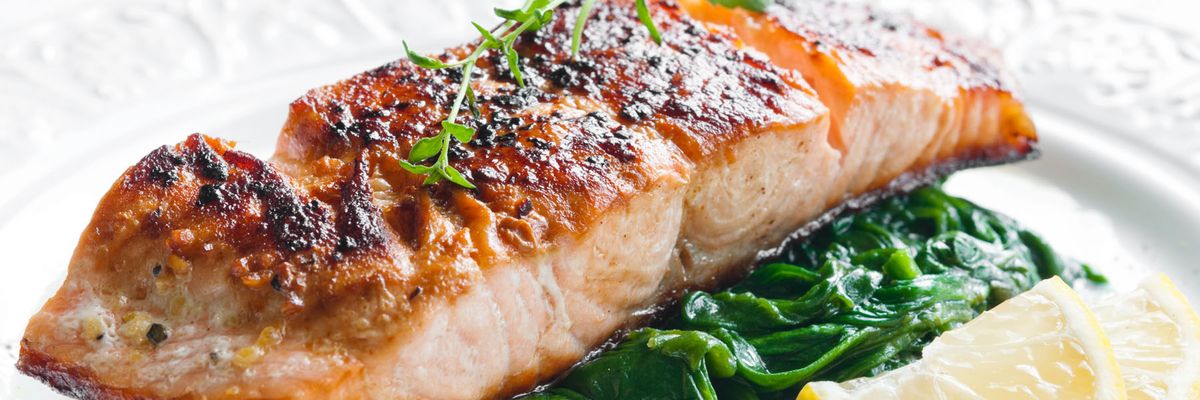
Fish is the fastest thing on this site to overcook. There's barely any connective tissue and not much fat (salmon aside), so the window between done and dry is a minute or two. It also has the biggest gap between the official safe temperature and what restaurants put on your plate. This guide covers both, plus the visual cues that work for shellfish, where a thermometer is usually more trouble than it's worth.
The safe temperature: 145°F
USDA and FoodSafety.gov put the safe minimum for fish at 145°F, or until the flesh is no longer see-through and flakes easily with a fork. That covers fillets and whole fish alike: salmon, tuna, tilapia, cod, catfish, trout, bass and the rest.
For a fillet, measure at the thickest point, sliding the probe in from the side. Fish only carries over a few degrees after it comes off the heat, a lot less than a roast, so you can pull it very close to your target.
Salmon: 145°F vs. what you'll get at a restaurant
At 145°F salmon is firm, opaque and flaky, and a bit on the dry side. Plenty of cooks and restaurants stop way earlier, around 120–125°F, when the center is still slightly translucent and the texture is silky. Some go lower still.
| Salmon at | Texture and look |
|---|---|
| 115–120°F | Translucent center, very soft (a restaurant "rare") |
| 120–125°F | Mostly opaque, slightly translucent center, moist |
| 130–135°F | Opaque, just starting to flake |
| 145°F | Fully opaque, flakes easily, firmest (USDA minimum) |
Anything under 145°F is your call, and USDA doesn't sign off on it. If you're cooking for someone pregnant, older, immunocompromised, or a young kid, take fish to 145°F. The less you plan to cook it, the more it matters where you bought it and that it stayed cold until it hit the pan. Also, "sushi-grade" and "sashimi-grade" aren't regulated terms in the U.S. They're the seller's description, which is a polite way of saying marketing.
Timing fish by thickness
The old kitchen rule: about 10 minutes per inch of thickness, measured at the thickest point, in a 400–450°F oven or over a hot grill. A 1-inch salmon fillet takes roughly 8 to 10 minutes; a ½-inch piece of sole, about 5. It's a rule of thumb, not a USDA figure, so use it to know when to start checking. Fish wrapped in foil or parchment, or cooked from frozen, takes longer.
Doneness cues for shellfish
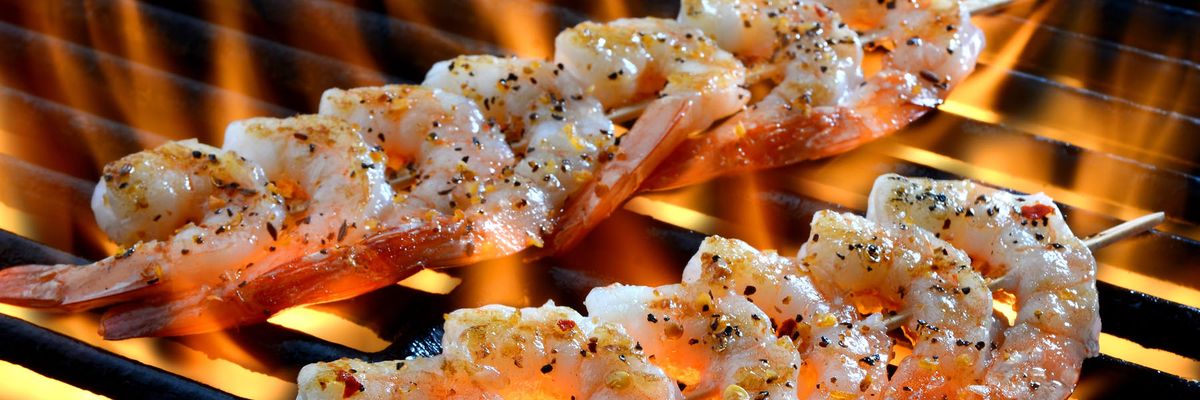
Shrimp, scallops and shellfish are usually too small or too oddly shaped to probe. FoodSafety.gov gives visual cues instead:
| Seafood | Done when |
|---|---|
| Shrimp, lobster, crab, scallops | Flesh is pearly or white and opaque |
| Clams, oysters, mussels | Shells open during cooking |
Shrimp
Raw shrimp is gray and see-through. Cooked shrimp is pink outside and opaque white inside. Large shrimp take about 2–3 minutes a side over medium-high heat. Watch the shape: a loose C means done. A tight O means overcooked and rubbery (O for "oops").
Scallops
Pat sea scallops bone-dry, salt them, and put them in a very hot pan. Don't touch them until a deep brown crust forms, about 1½–2 minutes a side. They're done when the sides go from translucent to opaque. A slightly translucent center is how a lot of restaurants serve them; fully opaque meets the guideline.
Clams, mussels and oysters
Before cooking, toss any with cracked shells, or open ones that won't close when you tap them. Steam them until the shells open, and toss any that stay shut.
Tuna and swordfish
Meaty fish steaks often get seared rare in the middle. Same deal as salmon: under 145°F is a choice you make with fish you trust. If you'd rather cook them through, keep the heat high and the time short. Tuna at 145°F is firm and dry, so it's best in a dish with a sauce.
Common mistakes
- Waiting for it to "look done" in the pan. Fish keeps cooking a little on the plate. Pull it as soon as it flakes at the thickest point.
- Probing from the top. A fillet is thin. Go in from the side.
- Crowding the pan. Too many pieces drop the pan temperature, and you end up steaming the fish instead of searing it.
- Thawing on the counter. Thaw fish overnight in the fridge, or sealed in cold water if it's thin.
- USDA Food Safety and Inspection Service, Safe Minimum Internal Temperature Chart
- FoodSafety.gov, Safe Minimum Internal Temperature Chart
- Salmon doneness ranges below 145°F and the 10-minutes-per-inch rule are common kitchen practice, not a USDA standard.