
Steak & Beef Temperature Guide
Rare to well-done, when to pull it, and how long a roast takes.
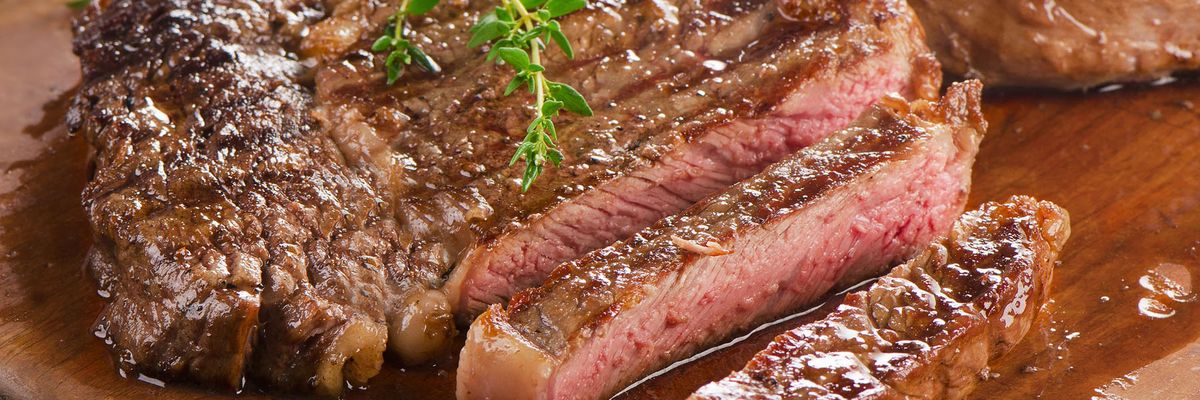
Beef is where doneness comes down to taste, and it's also where you get the least help. The recipe says "cook to medium-rare" and leaves you to figure out what that means on your grill, with your steak, at your thickness. This guide gives you the numbers: the final temperature for each doneness, when to pull the meat off the heat, and how long the common roasts take according to USDA's own chart.
Steak doneness temperatures
These are final temperatures, the number the steak lands on after it rests. Restaurants and most cookbooks use roughly these ranges.
| Doneness | Final temp | Pull a 1" steak at | Center looks like |
|---|---|---|---|
| Rare | 120–125°F | 115–120°F | Deep red, cool to barely warm |
| Medium-rare | 130–135°F | 125–130°F | Red-pink and warm all the way through |
| Medium | 135–145°F | 130–140°F | Rosy pink, firmer bite |
| Medium-well | 145–155°F | 140–150°F | Mostly brown, faint pink |
| Well-done | 155–160°F+ | 150–155°F | Brown throughout |
Why steak and ground beef play by different rules
A steak is one solid piece of muscle. Whatever bacteria it picked up at the packing plant and the store are sitting on the outside. A hard sear takes that surface way past anything bacteria survive, and the inside can stay pink.
Grinding changes the deal. The outside of every scrap of trim gets mixed into the middle of the batch, so the center of a burger can carry the same bacteria as the surface. That's why USDA sets ground beef at 160°F with no rest-time shortcut, and why a medium-rare burger is a real gamble while a medium-rare steak mostly isn't. The same goes for mechanically tenderized steaks (often labeled "blade tenderized"), where little needles push surface bacteria inside. Treat those like ground beef if you want some margin.
One more reason to use a thermometer on burgers: USDA warns that ground beef can turn brown inside before it's safe. The color is lying to you.
Carryover cooking: when to pull it
When a steak comes off the pan, the outer layer is a lot hotter than the center, and that heat keeps moving in. The internal temperature climbs for a few minutes before it levels off. How much it climbs depends on size and how hot you cooked it:
- Thin steaks (about ½"): 2–3°F. Pull close to your target.
- Standard steaks (¾" to 1½"): about 5°F.
- Big roasts: 5–10°F, sometimes more. A prime rib roasted hot can climb further than one roasted low and slow.
High heat means a bigger gap between outside and center, so more carryover. Low oven heat (like a reverse sear) means less. When in doubt, pull a little early. You can always throw a steak back on the heat. You can't uncook one.
Three ways to cook a steak
Pan-sear or direct grill
Best for steaks up to about 1¼ inches. Get the pan or grate screaming hot, pat the steak dry, and cook it over direct heat. Flipping every minute or so (instead of once) cooks it more evenly and doesn't cost you any crust, whatever your uncle says. A 1-inch steak usually takes 6–9 minutes total for medium-rare, but that depends so much on your heat that it's only good for knowing when to start checking.
Sear, then finish indirect
For steaks around 1½ inches. Sear both sides over direct heat until they're well browned, then move the steak to the cool side of the grill (or a 400°F oven) and let it come up gently. That keeps the outer layer from going gray before the middle catches up.
Reverse sear
For steaks 1½ to 2 inches and up, and for small roasts. Cook the steak in a low oven, around 250°F, until it's about 10°F under your target, then sear it in a smoking-hot pan for a minute or so a side. You get even color edge to edge, less carryover, and the oven dries the surface so it browns fast. The reverse-seared ribeye recipe walks through it step by step.
Beef roast cooking times (USDA chart)
USDA's roasting chart gives times to its 145°F safe minimum, with the oven at the temperature shown. If you want your roast rarer than that, start checking well before the low end of the range and pull it about 10°F under your target.
| Cut | Weight | Oven | Time |
|---|---|---|---|
| Rib roast, bone-in | 4 to 6 lb | 325°F | 23 to 25 min/lb |
| Rib roast, boneless | 4 to 6 lb | 325°F | 28 to 33 min/lb |
| Round or rump roast | 2½ to 4 lb | 325°F | 30 to 35 min/lb |
| Tenderloin roast, whole | 4 to 6 lb | 425°F | 45 to 60 min total |
We did the math for the common sizes:
| Roast | 4 lb | 5 lb | 6 lb |
|---|---|---|---|
| Rib roast, bone-in | 1 hr 32 min – 1 hr 40 min | 1 hr 55 min – 2 hr 5 min | 2 hr 18 min – 2 hr 30 min |
| Rib roast, boneless | 1 hr 52 min – 2 hr 12 min | 2 hr 20 min – 2 hr 45 min | 2 hr 48 min – 3 hr 18 min |
Why does bone-in take less time per pound than boneless? Some of a bone-in roast's weight is bone, which doesn't need cooking, and a boneless roast is usually rolled and tied into a thicker log.
Resting
USDA asks for at least 3 minutes of rest on whole cuts. During that time the temperature holds steady or keeps climbing, which finishes off any surface bacteria that survived. Past safety, resting is mostly about carryover: it's when the meat reaches its final doneness. Give steaks about 5 minutes and roasts 10 to 20, loosely tented with foil if your kitchen runs cold.
Common mistakes
- Measuring too close to the bone. Bone conducts heat and reads hot. Keep the probe in the thickest part of the meat, away from bone and fat.
- Measuring from the top on a thin steak. Slide the probe in from the side so the tip sits in the center.
- Trusting the clock on a new grill. Grills and burners vary wildly. Use your first few cooks to learn your heat, thermometer in hand.
- Checking once. Probe in two spots. Steaks are rarely an even thickness.
- USDA Food Safety and Inspection Service, Safe Minimum Internal Temperature Chart
- FoodSafety.gov, Meat and Poultry Roasting Charts
- Doneness ranges below 145°F are common kitchen convention, not a USDA standard.